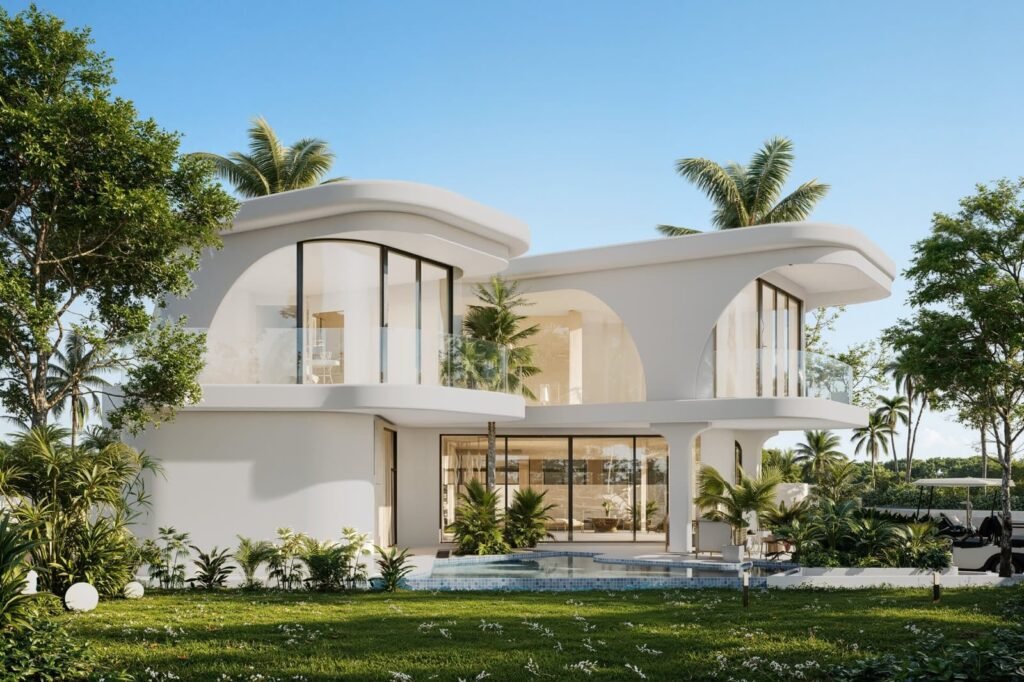
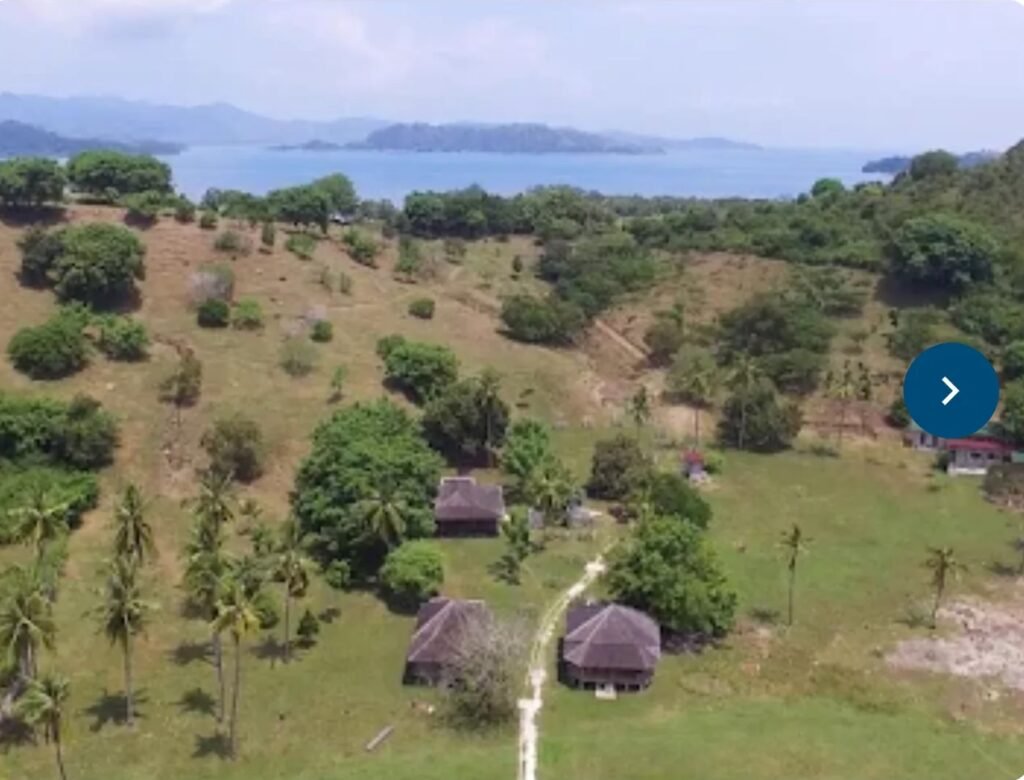
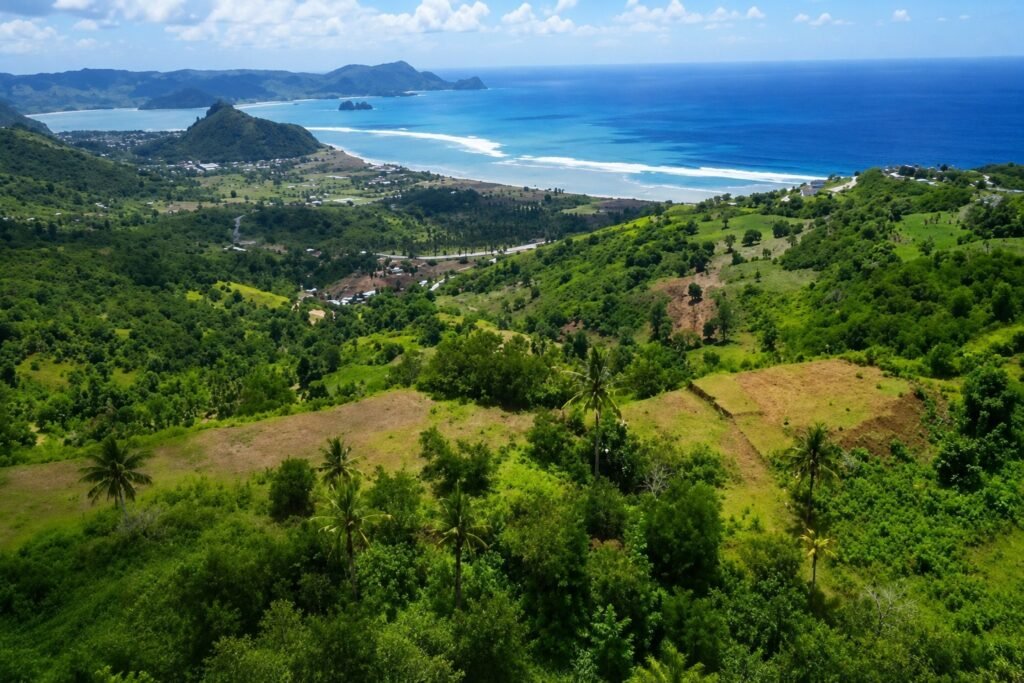
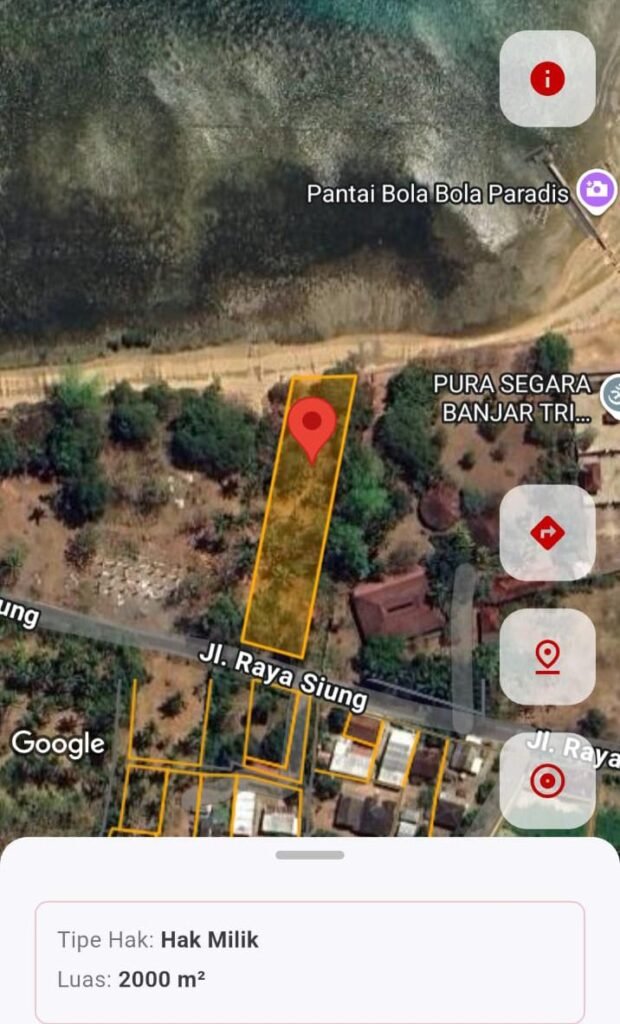
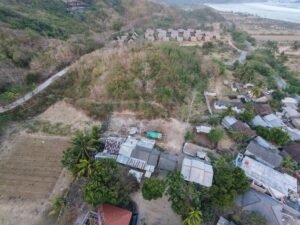
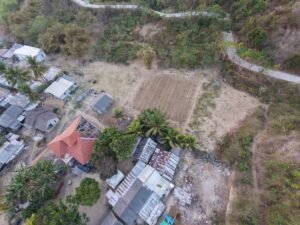
West Lombok’s story is less about a single growth corridor and more about two places at very different points in their own cycle. Senggigi was the island’s original resort strip, and is now working through a genuine repositioning. Torok is close to the opposite: a frontier bay only recently anchored by serious branded development. Grouping them together isn’t about pretending they’re the same market — it’s that both sit on the west coast, both are underwritten by a real infrastructure story, and both are easy to misjudge if you only look at headline price.
Senggigi
We’ll say the quiet part first: Senggigi’s visitor numbers have been in decline for years, not months. The wider tourist area peaked at around 675,000 arrivals in 2017, fell to under 400,000 by 2019 even before the pandemic hit, and the broader West Lombok regency saw total visits nearly halve between 2017 and 2023. If someone pitches Senggigi to you purely on nostalgia for its “original Lombok resort strip” status, ask them about that chart first.
What makes Senggigi worth a second look anyway is that the government has actually put money behind fixing the demand problem rather than just talking about it. A multi-segment waterfront redevelopment is underway — culinary corridor, heritage zone, coastal promenade — backed by several billion rupiah in completed public works, and the Senggigi jetty is being rebuilt specifically to enable direct fast-boat connections from Bali and the Gili islands, with reported completion around 85% and operations targeted for December. That’s the actual investment thesis: not “Senggigi is popular,” but “Senggigi is being deliberately re-engineered into a marine gateway, and land here is priced for the old story, not the one currently under construction.”
Pricing reflects the uncertainty honestly. Inland plots run IDR 650,000–2 million per square metre, hillside sea-view land climbs to IDR 1.8–3.5 million, and prime beachfront can reach IDR 2.5 million per square metre for large tracts — all of it below Bali equivalents, but without the demand momentum to match yet. This is a repositioning bet, not a momentum trade. It suits investors doing renovation, rebranding, or differentiated hospitality concepts more than passive buy-and-hold.
| Land Price (per m²) | IDR 650,000–7,500,000 per sqm[7][10] |
|---|---|
| Villa Price Range | USD 118,000–247,000 per managed small villa[9] |
| Gross Rental Yield | 9–14% gross annual yield[9] |
| Avg. Occupancy Rate | Not enough data |
| 12-Month Price Change | Land asking prices down 6.25% over last 6 months[10] |
| 3-Year Outlook | Tourism and long-stay digital nomad demand support occupancy, while a 6.25% Senggigi land price drop over 6 months indicates recent price adjustment[9][10]. |
Sources (15)
- Tanah Dijual di Senggigi | Harga Terbaru 2026 – Brighton
- Jual Beli Tanah di Senggigi, Lombok Barat
- Tanah Dijual di Lombok Barat
- Jual Beli Tanah di Lombok Barat | Harga Tanah Per Meter 2026
- Tanah Dijual di Nusa Tenggara Barat
- Dijual Tanah Wisata Senggigi Lombok Utara – 44.432 M² Shgb
- Freehold Land for Sale in Senggigi, Lombok Barat
- Jual Beli Tanah di Senggigi, Lombok Barat | Harga Tanah Per Meter 2026 – Hal 2
- Villa Rental Yields in Lombok 2026: Zone-by-Zone Honest Numbers
- Land for sale in Senggigi, Lombok Barat | Latest Prices
- Dijual Tanah Wisata Senggigi Lombok Utara – 12.678 M² Shgb
- Tanah Dijual di Senggigi, Lombok Barat
- Senggigi Villas Rentals | Expedia
- Gili Trawangan Furnished Monthly Rentals Long and Short-Stays
- Land For Sale Ocean View Near Sheraton Senggigi Lombok
Statistics compiled weekly by AI research from the cited public sources above · verify independently before investing.
Torok
Torok sits at almost the opposite end of the risk spectrum from Senggigi: instead of a mature market working through decline, it’s a genuine frontier corridor that recently picked up institutional backing in a single stroke. Gran Meliá Lombok — a development valued above US$80 million on a 16.3-hectare site — and the Meliá Collection’s Lombok Resort & Spa, with 22 duplex beachfront villas and more than 100 private villas planned, both anchor Torok Bay directly. That’s not a rumour of future investment; it’s committed capital from a global hospitality brand already on the ground.
Land pricing hasn’t fully caught up to that anchor yet. Inland and constrained plots around Torok and neighbouring Awang still trade at roughly Rp 30–50 million per are — among the lowest prices anywhere on this stretch of South Lombok, a fraction of Kuta’s frontage pricing. Ocean-view hillside parcels command more, with one recent listing of a large hillside development site priced around Rp 80 million per are and smaller ocean-view plots trading meaningfully higher, but even those remain well under prime Kuta or Selong Belanak levels.
The read here is straightforward: Torok is pricing like an undiscovered bay while hosting an internationally branded resort commitment most “undiscovered” locations don’t have. That gap is the opportunity, and it’s also the risk — branded resort construction timelines can slip, and land value in a corridor like this is still substantially a bet on that project actually delivering as planned.
| Land Price (per m²) | IDR 550,000–1,900,000 per m² for freehold land.[2][3][9] |
|---|---|
| Villa Price Range | USD 199,000–730,000 per built villa in Torok.[1][4][11] |
| Gross Rental Yield | Not enough data |
| Avg. Occupancy Rate | Not enough data |
| 12-Month Price Change | Not enough data |
| 3-Year Outlook | Road access, new villa resorts and nearby industrial and aquaculture zoning will influence Torok Bay land use and tourism over the next three years.[2][4][12] |
Sources (15)
- Built Villas in Lombok for Sale
- Lombok property for sale: reviewed villas and land
- Land for Sale in Lombok, Indonesia | Curated Ocean-View …
- Oceanview Villas for Sale in Torok: Stunning 15-Villa Resort
- Villa for sale in Lombok Tengah | Latest Price 2026 – Rumah123
- Land with Mountain View for Sale in Lombok Tengah, West Nusa Tenggara
- Properties
- Property for Sale in Lombok Tengah, West Nusa Tenggara – FazWaz.id
- Large hilltop land for sale in Torok with an amazing ocean view
- READY SOON OCEAN VIEW 2 BEDROOM VILLA FOR SALE FREEHOLD IN TOROK BE-3353 – Bali Exception Real Estate Agency
- Torok Hills
- Torok and Awang Bays: Industrial Neighbours and What They …
- Land
- Property for Sale in Praya Barat, Lombok Tengah – FazWaz.id
- 3-Bedroom Luxury Villa for Sale in Torok – Nour Estates
Statistics compiled weekly by AI research from the cited public sources above · verify independently before investing.