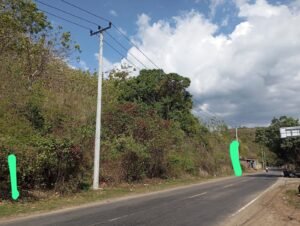
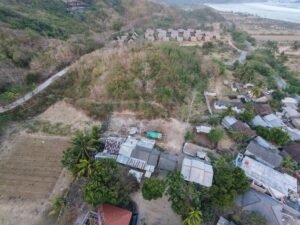
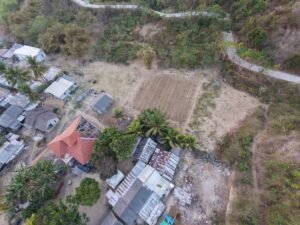
South Lombok is where most of the island’s property story is actually happening. Six very different pockets of coastline sit inside a 30-minute drive of each other and of Lombok International Airport, and each one has settled into its own identity rather than competing on the same terms — a surf break here, a family bay there, a master-planned enclave a little further along. What follows isn’t a spec sheet. It’s what we’d tell an investor sitting across the table from us about each of these six places, followed by the numbers that actually move week to week.
Kuta & Mandalika
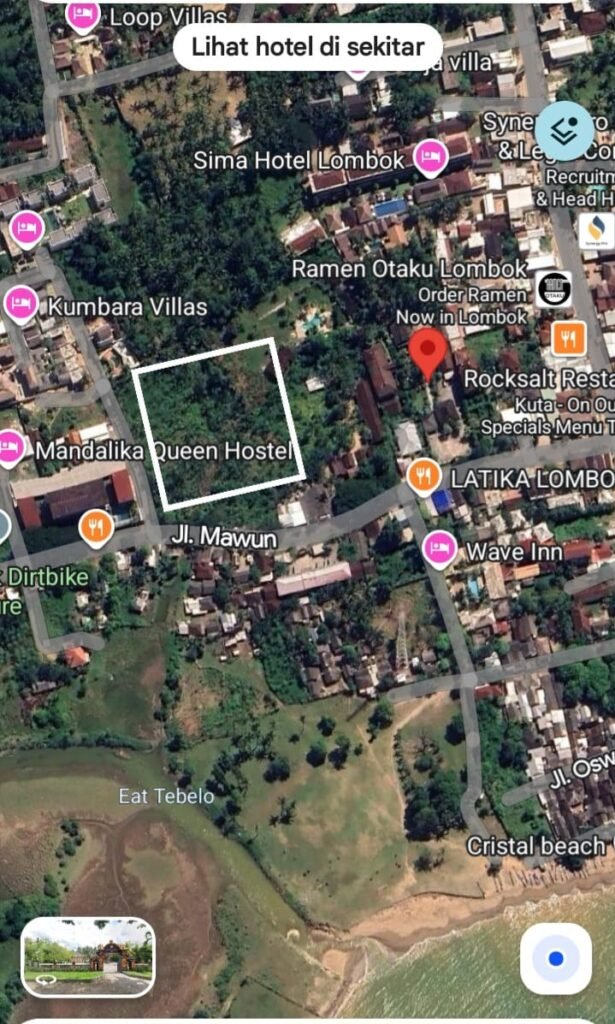
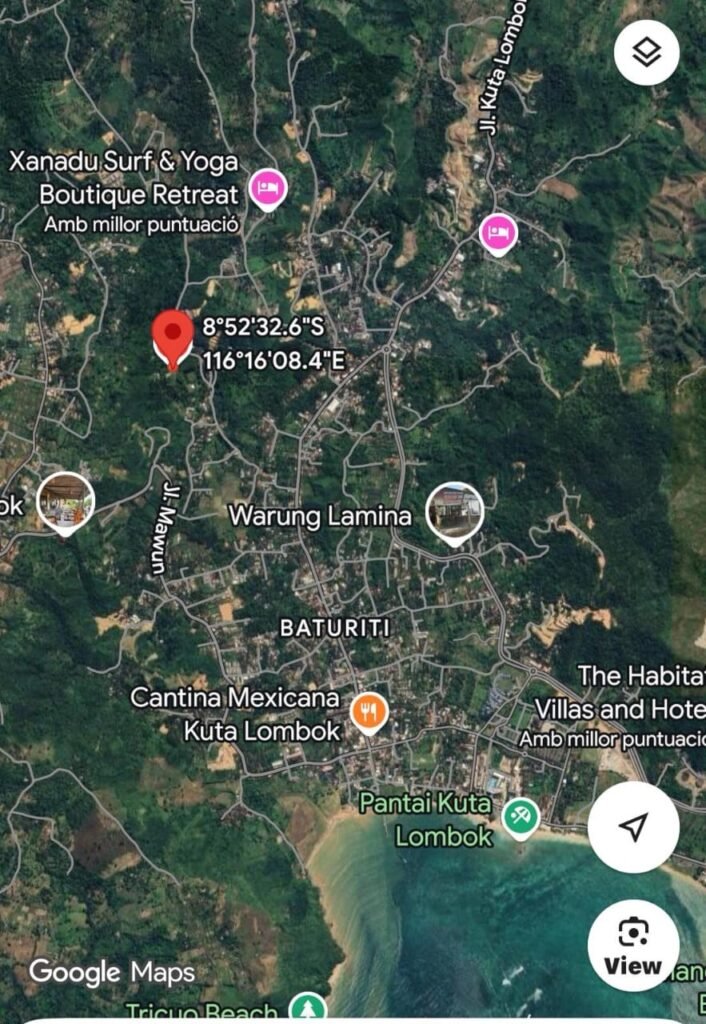
Kuta is no longer the sleepy fishing village its name still implies to people who haven’t visited recently. It sits inside the Mandalika Special Economic Zone, and the zone did something rare for a government-backed tourism project: it actually drew the numbers. Visitor arrivals to Mandalika went from roughly 827,000 in 2023 to over 1.24 million in 2024 — a jump of more than 50% in a single year, driven by MotoGP, the wider events calendar, and genuinely upgraded infrastructure rather than just marketing spend.
For an investor, that translates into Kuta being the price-setter for the entire south coast. Every other location in this guide gets measured against it, and every other location is cheaper. That’s not a knock on Kuta — it’s the reason the other five exist as opportunities rather than afterthoughts. If you want the most liquid, most de-risked entry point into South Lombok property, with the tightest correlation to the Mandalika growth story, Kuta is where you’d start. You’ll pay a premium for that certainty.
The honest caveat: land here doesn’t come cheap anymore, and the easy early-cycle gains have largely already happened. What’s left is a more conventional, event-driven growth market — still attractive, just not the ground-floor opportunity it was five years ago.
| Land Price (per m²) | IDR 270,000–6,000,000 per sqm[4][12] |
|---|---|
| Villa Price Range | USD 165,000–380,000 per villa[3][6][8] |
| Gross Rental Yield | Not enough data |
| Avg. Occupancy Rate | Not enough data |
| 12-Month Price Change | Not enough data |
| 3-Year Outlook | Multiple new villa projects and high commercial land prices in Kuta Lombok shape transaction volumes and development activity over the next three years.[3][8][15] |
Sources (15)
- Jual Tanah di Kuta, Harga Tanah Permeter Terbaru 2026
- Villas for Sale in Lombok
- property for sale kuta lombok – Nour Estates
- Jual Beli Tanah di Kuta, Lombok Tengah
- Kuta Tropical Villas for Sale: 1BR and 2BR from USD 135,000
- Lush Villas for Sale in Kuta Lombok: 3 Exclusive Villas – Nour Estates
- Lombok Property for Sale | Villas, Land & Commercial
- Stunning Villas For Sale In Kuta Lombok
- 15 STUNNING Villas in Kuta Lombok – The Broke Backpacker
- Lombok property market data 2026 – HubLombok
- Land for Sale in Kuta & South Lombok
- Land for sale in Kuta, Lombok Tengah | Latest Prices
- Best Villas in Lombok 2026 — Private Pools & Ocean Views
- Properties for Sale in South Lombok | Lands & Villas
- Buying in Kuta Town Centre: When Commercial Beats Residential
Statistics compiled weekly by AI research from the cited public sources above · verify independently before investing.
Selong Belanak
Selong Belanak is the bay that photographs better than almost anywhere else on the island, and that matters more for property than people sometimes admit — a beach that sells itself in a single Instagram frame has a durability that marketing budgets can’t buy. It sits about 30–40 minutes from the airport, close enough to feel connected without feeling like an extension of Kuta.
What’s interesting here is the internal stratification. The inland plain — the flatter land set back from the immediate shorefront — makes up the bulk of what’s actually investable and trades at a real discount to Kuta. But the ridgelines and hillside plots with a direct bay view are tightening fast, with some prime parcels now changing hands at prices that would have seemed aggressive two years ago. If you’re buying for the view, you’re competing with a shrinking pool of sellers. If you’re buying for the location and don’t need the postcard frame, there’s still room to move.
We’d frame Selong Belanak as the “growing into itself” bay of South Lombok — past the frontier stage, not yet fully priced like Kuta, riding the same provincial tourism tailwind (West Nusa Tenggara logged around 1.5 million arrivals in the first half of 2024 alone, with a 2.5 million full-year target).
| Land Price (per m²) | Rp 0.44–2.5 million per sqm[1][3][4] |
|---|---|
| Villa Price Range | USD 230,000–450,000 (about IDR 4.8–8.1 billion)[9][13][15] |
| Gross Rental Yield | Not enough data |
| Avg. Occupancy Rate | Not enough data |
| 12-Month Price Change | Not enough data |
| 3-Year Outlook | Next 3 years driven by ongoing villa and resort projects, high land values relative to wider Lombok, and recent quarterly land price increases in Selong Belanak.[5][7][10] |
Sources (15)
- Jual Tanah di Selong Belanak, Harga Tanah Permeter Terbaru 2026
- Selong Belanak Villas Rentals
- Tanah Dijual di Selong Belanak, Lombok Barat
- Selong Belanak Property: Prices, Demand and the … – HubLombok
- Selong Selo Resort 2026: Clifftop Villas Above Selong Belanak
- Tanah SHM Dijual di Selong Belanak, Lombok Barat
- Land for sale in Selong Belanak, Lombok Barat | Latest Prices
- Book Cheap Villa in Selong Belanak – Lombok
- Property for Sale in Selong Belanak | Villas & Land
- How Much Does Land in Lombok Cost? [2026 Update]
- Land for sale in Praya Barat Daya, Lombok Tengah – Rumah123
- Freehold Land For Sale in Selong Belanak, Lombok Barat | Best …
- Selongbelanakvilla Near Kuta Lombok: 2027 Guide to Beaches …
- Selong Selo Villas | Selong Belanak, Lombok | Indonesia
- 3-Bedroom Private Villa for Sale in Selong Belanak, Lombok
Statistics compiled weekly by AI research from the cited public sources above · verify independently before investing.
Mawi Beach
Mawi is a surfer’s beach first and an investment thesis second, and that ordering is exactly why it’s interesting right now. It’s still priced like a niche destination — beachfront plots trading in the neighbourhood of US$80–85 per square metre, well under what equivalent frontage costs at Selong Belanak or Kuta — while road access keeps improving and a handful of boutique villa and resort projects have started clustering around the bay.
The airport is close, roughly 16–20 km, which matters more for Mawi than for some of the other bays because it’s the difference between “reachable weekend surf trip” and “genuine short-stay villa market.” Right now it reads as early-but-moving: land is still a discount to its neighbours, but the discount is the point, not a warning sign, provided the buyer is comfortable holding through a build-out phase rather than expecting instant liquidity.
The honest framing: this is a growth-stage market, not a mature one. Infrastructure on the immediate beachfront is still catching up to the interest developers are showing in the wider area, and a buyer here is underwriting the next 3–5 years of that catch-up, not today’s amenity level.
| Land Price (per m²) | Around IDR 525,000–1,400,000 per sqm for Mawi Beach beachfront land[6][14][15] |
|---|---|
| Villa Price Range | US$99,990–339,990 per private pool villa near Mawi Beach[1][2][12] |
| Gross Rental Yield | Not enough data |
| Avg. Occupancy Rate | Not enough data |
| 12-Month Price Change | Not enough data |
| 3-Year Outlook | Government-backed tourism promotion, airport access and ongoing villa-resort projects at Mawi Beach are expected to influence real estate demand over the next three years[1][10][11] |
Sources (15)
- Premier Lombok Beachfront Residences — Villas From $139,990 | ROI Focus – Selong Belanak – 1 bed villa for sale
- Stunning Villas From $99,990 in Mawi, on the Stunning Island of Lombok
- Available Archives – Nest Invest Global
- Land for sale in Selong Belanak, Lombok Barat | Latest Prices
- Beach Access Archives – Nest Invest Global
- Mawi Beach ********. 52.5Million/Are. Take All. | Rumah123
- Villas for Sale in Lombok
- Freehold Land For Sale in Selong Belanak, Lombok Barat | Best …
- 1 bedroom Villa 80 m² Kute, Indonesia – Realting.com
- Exclusive Lombok Mawi villas for sale – ARYA Properties
- 2 bedroom Villa for sale in Kute, Indonesia for $229 990 – listing #3869878
- Mawi Beach Lifestyle – Real Estate Listings, Mondinion.com Global Real Estate
- ARYA Mawi Lombok | Price Information & Reservations
- Tanah Beach Front Pantai Mawi View Amazing MURAH – Rumah123
- SOUTH LOMBOK MAWI – BEACHFRONT
Statistics compiled weekly by AI research from the cited public sources above · verify independently before investing.
Mawun
Mawun is the horseshoe bay sitting almost exactly between Kuta and Selong Belanak, and its pricing reflects that in-between position honestly: it’s the second-cheapest entry point on this whole stretch of coast, at roughly a sixth of Kuta’s land price on a per-square-metre basis, without being the cheapest or most speculative option either.
What we like about Mawun is that it doesn’t require a story about a future road or a future airport to make sense — it’s already positioned between two proven demand centres, and buyers are simply paying less to be a short drive from both rather than embedded in either. A flat plot close to Mawun Beach recently changed hands at a price point noticeably above the area’s quoted low range, which is a small but real signal that build-ready land with utilities already in place is being bid up faster than raw hillside.
If Kuta is the establishment and Selong Belanak is the rising star, Mawun is the value play sitting quietly between the two — worth watching specifically for how quickly that gap closes as both neighbours continue to build out.
| Land Price (per m²) | Around IDR 500,000–900,000 per sqm for typical Mawun land parcels[4][5][13] |
|---|---|
| Villa Price Range | Typically about €100,000–205,000 for a completed Mawun villa[2][6] |
| Gross Rental Yield | Around 8–14% gross annual yield for short-term rental villas in the Kuta–Selong Belanak–Mawun corridor[14] |
| Avg. Occupancy Rate | Professional management typically achieves about 55–70% average annual occupancy for South Lombok villas, including Mawun[2][13][14] |
| 12-Month Price Change | Not enough data |
| 3-Year Outlook | Tourism growth linked to Mandalika events, MotoGP-related demand, and continued airport and road upgrades is expected to shape Mawun property performance over the next three years[2][13][14] |
Sources (15)
- Jual Tanah di Lombok, Harga Tanah Permeter Terbaru 2025
- Lombok property market data 2026: prices, yields, occupancy by zone
- Mawun – Tanah Dijual di Nusa Tenggara Barat
- What Your Budget Buys in South Lombok: Under $100k, $100-250k, $250k+
- Mawun Beach, Lombok: Property and Land Investment Outlook
- Mawun — Investment outlook – HubLombok
- Tanah Dijual Kavling di Lombok, Badung
- South Lombok Land for Sale | Verified Plots Per-Are Pricing
- Jual Beli Tanah di Lombok Tengah
- Praya Barat, Lombok Tengah 土地出售 | Harga per Meter Terbaru
- TerraNusa Advisory — Your Land in Paradise, Lombok
- 35 Are Flat Land for Sale in Mawun, South Lombok
- Frequently Asked Questions — Buying Property in Lombok
- What Returns Can You Expect from Lombok Real Estate?
- Premium Land in the Mawun Hills, Ocean View, Central Lombok | Rumah123
Statistics compiled weekly by AI research from the cited public sources above · verify independently before investing.
Areguling
Areguling (sometimes written Air Guling) is a wide, still largely undeveloped bay about 20–30 minutes from Kuta, and it’s the closest thing on this list to a genuine frontier play. Land here trades at roughly a third of Kuta’s price, and the hillsides and coves that make up most of the bay are still in a pre-development state rather than mid-build.
That’s the trade-off in plain terms: you’re not paying for infrastructure or proof-of-concept here, because there isn’t much of either yet. What you are paying for is a genuine surf break, relatively undeveloped land at a meaningful discount to its neighbours, and exposure to the same macro tourism growth driving the rest of South Lombok. Reported net rental yields for the broader South Lombok short-term rental market run in a wide 15–25% band with occupancy trending upward — figures that apply more optimistically to established bays than to Areguling today, but which describe the ceiling this area is working toward, not the floor it’s starting from.
This is a patient-capital location. It rewards buyers comfortable being early rather than buyers who need amenities and occupancy data to already exist.
| Land Price (per m²) | IDR 600k–3,500k per sqm for Areguling land[7][14][15] |
|---|---|
| Villa Price Range | Approx. USD 300k–950k per completed 2–3BR villa including land[3][8][11] |
| Gross Rental Yield | 8–14% gross annual short-term rental yield for established villas[3][8][11] |
| Avg. Occupancy Rate | Typically 55–75% average annual occupancy once villas are established[3][11] |
| 12-Month Price Change | Not enough data |
| 3-Year Outlook | High gross rental yields and rising luxury land prices are attracting ongoing villa development and international investors in Areguling.[3][8] |
Sources (15)
- Seaview Land for Sale in Areguling, Lombok
- Areguling Hillside Plots for Sale near Kuta & Beaches
- Villa Rental & Property Management in Lombok | Prestige …
- Properties for Sale in South Lombok | Lands & Villas
- 53 Tanah Dijual 190000000 rupiah di Lombok Tengah – Mitula Properti
- 7.5 Are Land for Sale in Areguling, Lombok
- South Lombok Property for Sale: The 2026 Investor's Guide
- Lombok Luxury Villa Investment: A Complete Guide
- 2 Hectares Hillside Land for Sale in Areguling, South Lombok
- Lombok land prices: is now the right time to buy | Maju …
- Lombok Villas For Sale – Houses, Villas, Land For Sale
- 10 are Flat Plot for Sale in South Lombok | Maju Properties
- Jual Tanah di Harga Dibawah 300 Juta di Pujut Lombok Tengah …
- 30 are Flat Plot for Sale in South Lombok | Maju Properties
- Why South Lombok Is the Next Canggu | Prestige Lombok Journal
Statistics compiled weekly by AI research from the cited public sources above · verify independently before investing.
Tampah
Tampah is a different kind of investment altogether from the other five bays on this list, and it’s worth being upfront about that rather than forcing it into the same frame. Rather than raw land parcels bought individually, Tampah is anchored by the Tampah Hills master-planned community — roughly 120 hectares of hillside overlooking Tampah Bay, about 30 minutes from the airport and 15 minutes from Kuta, with roads, power, water and internet already built rather than promised.
The development is capped at 120–150 villas across the site, buildings are restricted to a maximum of 30% of each lot, and more than 20,000 trees have been planted as part of the plan — deliberate low-density positioning rather than a maximise-every-square-metre subdivision. Stage 3 pricing runs from around US$100 per square metre for A-grade lots up to US$145 per square metre for AA-grade hillside positions facing the bay and the sunset, with lot sizes generally between 1,700 and 4,800 square metres.
The honest way to think about Tampah: you’re not buying raw land and taking on your own build risk, you’re buying into a single developer’s master plan and taking on concentration risk in exchange for infrastructure that already exists. That’s a genuinely different risk profile to Kuta, Selong Belanak, Mawi, Mawun or Areguling, and it suits a different kind of buyer.
| Land Price (per m²) | USD 14–60 per sqm for Tampah hillside and serviced plots[5][14] |
|---|---|
| Villa Price Range | EUR 220,000–425,000 per villa in Tampah Beach Villas[12][8] |
| Gross Rental Yield | Not enough data |
| Avg. Occupancy Rate | Not enough data |
| 12-Month Price Change | Not enough data |
| 3-Year Outlook | Tourism in South Lombok growing around 15% yearly and completion of Tampah Hills and Tampah Beach Villas by 2028 may raise property demand and rental income[8][12][15] |
Sources (15)
- Land for Sale in Kuta & South Lombok
- Properties for Sale in South Lombok | Lands & Villas
- Land for sale in Tampah Lombok – Premium Seaview Plots
- Hillside Plot for Sale in South Lombok | Maju Properties
- Hillside Land for Sale at Tampah South Lombok
- 58 are Hillside Land for Sale in Tampah Lombok
- 2 Beachfront Plots for Sale in South Lombok
- www.baracacapital.com › locations › lombokLombok Real Estate & Property Investment 2026 | Baraca Capital
- Tampah, Lombok: A peaceful paradise – Maju Properties
- Tampah – Beachfront 12 & 22 are
- Tampah – Flat land 20 are
- Tampah Beach Villas in South Lombok
- Pererenan Bali: A Complete Guide To The Hidden Gem Of …
- Land for Sale in Lombok | SeaScape
- Lombok Hotel & Branded Residences
Statistics compiled weekly by AI research from the cited public sources above · verify independently before investing.