
Every foreign buyer who gets serious about Lombok property eventually hits the same question: the PT PMA vs Hak Pakai choice.
Ask a property agent and they’ll tell you whichever one makes your purchase happen faster. Ask a lawyer and you’ll get a 40-page memo. This guide gives you the clear version: what each structure actually is, what it costs, what you can and cannot do with it, and which one makes sense for your specific situation.
The short answer: PT PMA is the right structure for investment property generating rental income. Hak Pakai is the right structure for a personal residence or lifestyle purchase. If you’re reading this site, you are almost certainly an investor — which means PT PMA is almost certainly your answer. But understanding why requires understanding exactly how each structure works, what the cost difference looks like over 5 years, and what the tax implications are.
Before the legal framework: if you want to model what a specific Lombok property returns under different ownership cost scenarios, the Lombok ROI Calculator lets you factor in PT PMA compliance costs against projected rental income.
Quick Reference: PT PMA vs Hak Pakai at a Glance
| PT PMA | Hak Pakai | |
|---|---|---|
| Who holds title | Indonesian company (you own the company) | You personally |
| Title type | HGB (Hak Guna Bangunan) | Hak Pakai certificate |
| Term | 30 + 20 + 30 years (up to 80 years, renewable) | 30 + 20 years (up to 50 years, renewable) |
| Max properties | Unlimited | 1 property |
| Commercial rental allowed | ✅ Yes — Airbnb, villas, hotels | ❌ No — personal use only |
| Setup cost | IDR 30–80M (~USD 1,850–4,900) | IDR 5–15M (~USD 310–920) |
| Annual compliance cost | IDR 20–50M/year (~USD 1,230–3,080) | None |
| Income tax on rental | 22% corporate tax (PPh Badan) | Not applicable |
| Best for | Investment / rental income / multiple properties | Personal residence / retirement / lifestyle |
BKPM Regulation 5/2025 (effective ~2 Oct 2025): PT PMA issued/paid-up capital for many activities was cut to IDR 2.5 billion, with a 12-month capital lock-up. The total investment plan requirement of more than IDR 10 billion per KBLI/location generally still applies — so the headline “cheaper company setup” does not mean a sub-IDR 10bn project is automatically compliant. Nominees remain illegal. For short-stay villa rental, confirm tourism (pink) zoning; residential zoning alone is not a short-let licence
PT PMA vs Hak Pakai: PT PMA in Depth

A PT PMA (Perseroan Terbatas Penanaman Modal Asing — a foreign-owned limited liability company under Indonesian law) allows a foreign national to establish an Indonesian company and hold property through it. The company holds the land title under Hak Guna Bangunan (HGB) — Building Use Rights — which grants full rights to build on, develop, and commercially operate the property.
What PT PMA Actually Allows You to Do
This is the critical point that most PT PMA vs Hak Pakai comparisons skip. Under Indonesian law, commercial operation of a property — including any form of short-term rental, villa management, Airbnb listing, or boutique accommodation — requires a legal business entity. A foreign national cannot personally list a villa on Airbnb or Booking.com and legally receive rental income in Indonesia without a registered company structure.
PT PMA is that company structure. It is not just a way to hold the property — it is the legal framework that makes income-generating property investment possible for foreigners in Indonesia.
PT PMA Setup: Process and Timeline
- Name registration and Articles of Association — notaris drafts the company deed (1–3 days)
- OSS (Online Single Submission) registration — company registered with BKPM/OSS online system (3–7 days)
- Tax registration (NPWP) — company tax ID obtained (1–2 days)
- Business licence (NIB — Nomor Induk Berusaha) — single business number covering operating licence and investment registration (1–3 days via OSS)
- Bank account opening — corporate account in Indonesian bank (1–2 weeks)
- Property acquisition — notaris handles land title transfer to the company (1–4 weeks)
Total timeline: 4–8 weeks from start to property title transfer. Most experienced notaris in Mataram or Kuta can run this in 3–5 weeks.
PT PMA Costs: Full Breakdown
| Cost Item | IDR | USD (approx) | When |
|---|---|---|---|
| Notaris fee (company formation) | IDR 8–20M | USD 490–1,230 | One-time |
| BKPM / OSS registration | IDR 0–5M | USD 0–310 | One-time |
| Legal/consultant fee (optional) | IDR 10–30M | USD 615–1,845 | One-time |
| Bank account setup | IDR 1–3M | USD 60–185 | One-time |
| Total setup | IDR 30–80M | USD 1,850–4,920 | |
| Annual accounting/tax filing | IDR 15–30M | USD 920–1,845 | Annual |
| Annual corporate compliance | IDR 5–20M | USD 310–1,230 | Annual |
| Total annual compliance | IDR 20–50M | USD 1,230–3,075 | Per year |
Indonesia’s updated PT PMA capital rules significantly reduced the minimum paid-up capital requirement for small PT PMAs. For property investment under IDR 10 billion, consult a current notaris for the applicable threshold — the requirements changed substantially in 2024 and vary by business classification.
PT PMA Tax Implications
Corporate Income Tax (PPh Badan): 22% on net company profit. For a villa generating IDR 300M/year gross income with IDR 150M in deductible operating costs, taxable profit is IDR 150M → tax liability IDR 33M/year.
Dividend withholding tax: When you extract profit from the PT PMA as a dividend, Indonesia applies a 20% withholding tax — reduced under tax treaties. The UK, Netherlands, Singapore, and Australia all have favourable DTA rates. The effective combined tax rate on rental income extracted as dividends is typically 30–35% for most Western investors before any home-country tax credits.
The offset: All legitimate PT PMA operating costs are deductible — management fees, maintenance, staff salaries, accounting fees, depreciation, and the compliance costs themselves. A well-run PT PMA with a local accountant can significantly reduce taxable profit versus gross income.
Hak Pakai in Depth
On the Hak Pakai side of the PT PMA vs Hak Pakai comparison, Hak Pakai (Right of Use) is a title granted directly to an individual foreign national — no company required. Your name appears on the land certificate. It is the cleanest, simplest property holding structure for foreigners in Indonesia.
What Hak Pakai Actually Allows You to Do
Personal use of the property: residence, holiday home, long stays. You can live in it and sell it. What you cannot do: operate it commercially, list it on Airbnb or Booking.com, charge nightly rates, or run any form of accommodation business. The limitation is absolute — not a grey area.
Hak Pakai Eligibility Requirements
- A valid Indonesian residential permit (KITAS or KITAP) or retirement visa (ITAS Retur)
- The property must be used as a personal residence, not commercial
- Only one property under Hak Pakai per individual
- Property must be in a government-designated zone — Lombok/NTB qualifies
Hak Pakai Costs
| Cost Item | IDR | USD (approx) |
|---|---|---|
| Notaris fee (title transfer) | IDR 5–15M | USD 310–920 |
| Land certificate conversion fee | IDR 1–3M | USD 60–185 |
| Annual property tax (PBB) | Varies by value | ~0.1–0.5% of NJOP |
| No ongoing compliance cost | — | — |
Side-by-Side: The 5 PT PMA vs Hak Pakai Decisions That Matter
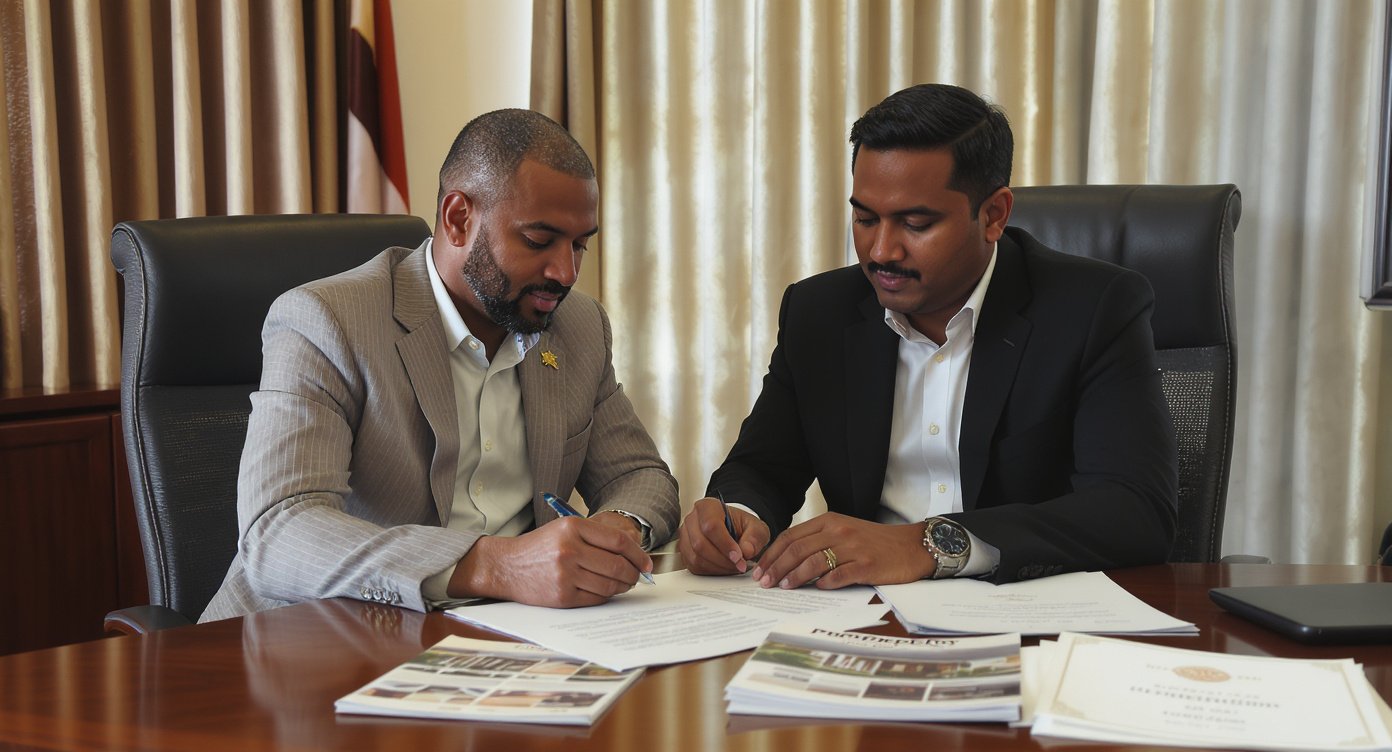
Decision 1 (PT PMA vs Hak Pakai): Will You Rent It Out Commercially?
If yes → PT PMA only. There is no legal alternative for commercial rental by foreigners in Indonesia. In the PT PMA vs Hak Pakai comparison, this single question resolves the decision for most investors.
Decision 2: Do You Plan to Hold More Than One Property?
If yes → PT PMA. The one-property limit on Hak Pakai is hard. A second Lombok property cannot be held under a second Hak Pakai by the same individual.
Decision 3: What Is Your Visa Status?
Hak Pakai requires a residential permit (KITAS/KITAP) or retirement visa. If you are buying remotely as a non-resident foreign investor — which is most of the international market for Lombok — Hak Pakai may not even be legally available to you. PT PMA has no visa requirements for the company structure itself.
Decision 4: What Is Your Holding Timeline?
PT PMA HGB title runs up to 80 years renewable. Hak Pakai runs up to 50 years renewable. For investment properties held over decades, PT PMA offers a longer initial horizon. For a personal residence with a 20–30 year horizon, Hak Pakai is entirely adequate.
Decision 5: What Does Your Tax Treaty Look Like?
Your home country’s tax treaty with Indonesia affects the effective tax rate on rental income extracted from a PT PMA. The Netherlands, Singapore, and UK all have favourable DTA rates that reduce dividend withholding tax from 20% to 10–15%. For investors from these jurisdictions, the net tax cost of PT PMA is lower than for those without treaty access.
PT PMA vs Hak Pakai vs Nominee: Why Nominees Are Illegal
A third “option” sometimes suggested informally: use an Indonesian nominee — a local citizen who holds freehold title (Hak Milik) on your behalf under a private agreement. This is illegal under Indonesian law, unenforceable in court, and the most common source of property loss for foreign investors in Indonesia.
The 7 mistakes foreign investors make in Indonesia puts nominee arrangements at the top of the list for good reason. The cost of setting up a PT PMA properly is IDR 30–80M. The cost of losing a property held under a nominee arrangement is the entire purchase price.
PT PMA vs Hak Pakai: The 5-Year Cost Comparison
Consider a foreign investor buying a 2-bedroom villa in Kuta Lombok for USD 220,000 (IDR 3.6 billion).
PT PMA route:
- Setup: IDR 50M (USD 3,070) — one-time
- Annual compliance: IDR 35M/year (USD 2,150)
- 5-year total ownership cost: ~USD 13,800
- Rental income enabled at 8% net: USD 17,600/year = USD 88,000 over 5 years
- Net position after ownership costs: +USD 74,200
Hak Pakai route:
- Setup: IDR 10M (USD 615) — one-time
- Annual PBB tax only: ~USD 185–490/year
- 5-year total ownership cost: ~USD 3,000
- Rental income enabled: USD 0
The PT PMA costs USD 10,800 more over 5 years. The rental income it enables is USD 88,000. For any investor planning to rent commercially, the PT PMA pays for its own compliance cost within 3–4 months of rental income.
Use the Lombok ROI Calculator to model this for your specific property — enter PT PMA compliance cost as a fixed annual expense and see exactly how it impacts your net yield.
Which PT PMA vs Hak Pakai Structure Is Right for You?
Choose PT PMA if:
- You intend to rent the property commercially (Airbnb, villa rental, short-stay accommodation)
- You plan to acquire more than one property in Indonesia
- You are buying as a non-resident foreign investor without a KITAS/KITAP
- You are buying with a 7+ year investment horizon
Choose Hak Pakai if:
- The property is a personal residence or retirement home — you will live there, not rent it commercially
- You hold a valid Indonesian residential visa (KITAS/KITAP or retirement ITAS)
- This is your only Indonesia property
- You want the simplest, lowest-cost structure with your name directly on the title
For most international investors researching Lombok for rental income and capital appreciation, the PT PMA vs Hak Pakai answer is clear: PT PMA is the correct answer. The additional cost is real but recoverable within months. The commercial flexibility it provides is not available under any other legal structure.
Conclusion: PT PMA vs Hak Pakai
Ultimately, the PT PMA vs Hak Pakai decision comes down to one question: are you buying for investment income, or for personal use? Every other consideration flows from this.
PT PMA costs more to set up and maintain. It pays for itself through the commercial rental rights it enables — and those rights are the entire financial thesis for most foreign property investors in Lombok. Hak Pakai is simpler, cheaper, and appropriate for personal ownership — but it locks out the yield that makes Lombok property attractive in the first place.
Get the structure right before you sign. A PT PMA established properly costs USD 1,850–4,920. Fixing a poorly structured acquisition after the fact costs far more — in legal fees, lost income, and sometimes the asset itself. Read the complete guide to buying property in Lombok as a foreigner for the full step-by-step process once you’ve confirmed your structure.
Download the free Lombok Investment Guide for a complete due diligence checklist, legal structure comparison, and step-by-step buying process for foreign investors.
This article is for informational purposes only and does not constitute legal or financial advice. Indonesian property law and regulatory requirements change — always consult a qualified Indonesian notaris or property lawyer before making investment decisions. All cost figures are approximate and should be confirmed with current professional quotes.

Author: Brusca
Living in Indonesia for 15 years, with hands-on experience in how the Indonesian real estate industry actually works. Lombok is currently the fastest-growing property market in Southeast Asia. Every listing on this site is vetted where timing allows.






Leave a Reply