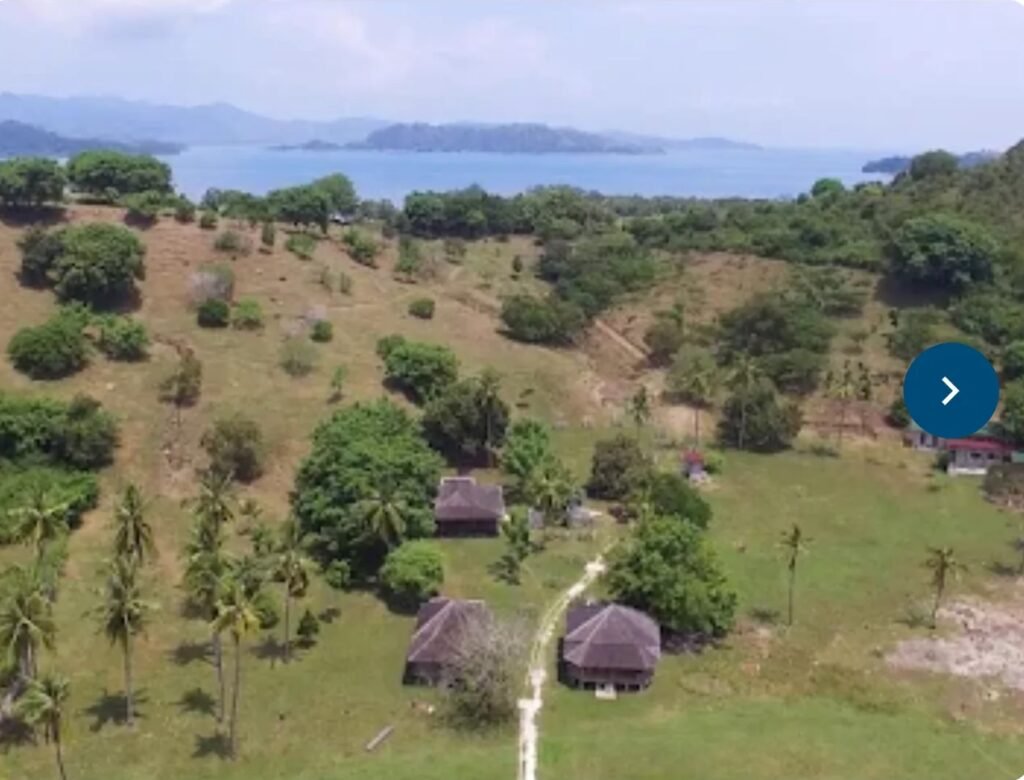
North Lombok, in practice, means the Gili Islands — Gili Trawangan, Gili Air and Gili Meno — and they deserve their own regional page rather than a line item, because they operate on a completely different scale to the rest of the island. This is the one part of Lombok’s property market that’s genuinely mature, high-yield and internationally known in its own right, closer in character to a boutique island resort market than to the mainland’s growth-corridor story.
Gili Islands
The scale of the Gilis’ tourism base isn’t subtle. The three islands together drew roughly 600,000 visitors by the end of 2023, out of about 656,000 for the whole of North Lombok Regency — meaning the Gilis effectively are North Lombok’s tourism economy. Zoom out further and the growth curve is even more striking: Gili Trawangan alone went from around 35,000 annual visitors in 2009 to over a million by 2015. Daily arrivals across the cluster now run 2,000–2,500 on a normal day, climbing to 3,000–3,500 in August peak season, with projections toward 4,500 a day at the very top of the cycle.
That level of sustained, repeat-heavy demand is exactly why Gili land pricing looks nothing like the mainland’s. This isn’t a single market — it’s several, stacked on top of each other by proximity to the sunset-facing beachfront. Absolute prime sunset frontage on Gili Trawangan has traded as high as roughly IDR 175 million per square metre for a trophy parcel, with other prime beachfront closer to IDR 75 million per square metre. Step back from the immediate shorefront and secondary, interior plots trade in a far more accessible IDR 1.3–4.5 million per square metre range — still a real premium to mainland Lombok, but an entirely different conversation to beachfront.
The practical takeaway for an investor: decide early which Gili market you’re actually buying into. Trophy sunset beachfront is a wealth-preservation and prestige purchase more than a yield play at that price point. Interior and secondary plots, by contrast, sit inside one of the most consistently visited tourism markets in eastern Indonesia, at land prices that remain modest relative to the demand sitting on top of them.
| Land Price (per m²) | Around Rp 750,000-1,300,000 per sqm for freehold land on main Gili Islands, based on Rp 75-130 million per are listings[1][6]. |
|---|---|
| Villa Price Range | About USD 140,000-950,000 for 1-4 bedroom villas in Gili Islands developments and listings[2][15]. |
| Gross Rental Yield | Around 9-12% average gross annual yield reported for Lombok and Gili Islands short-term rentals[12]. |
| Avg. Occupancy Rate | Trailing 12-month average occupancy around 78% for Gili Islands short-stay villas, with some datasets showing 35-38% for Gili Trawangan and Gili Air[5][10]. |
| 12-Month Price Change | Not enough data |
| 3-Year Outlook | Next 3 years driven by expanding tourism, improving Lombok-Gili transport connectivity and constrained land supply; tax on rental income and regulations remain material headwinds[2][4][13]. |
Sources (15)
- Beyond Bali: Lombok, Sumba, Flores and Nusa Penida for Property Buyers
- Gili Islands High-Yield Real Estate – Excellence Bali
- Luxury homes for sale in Lombok, West Nusa Tenggara …
- Lombok Property Investment Guide 2026: The Next Bali?
- Owner Nights Against Rental Nights: The Real Cost
- Gili Islands Real Estate for Sale
- Bali & Gili Islands Property Investment for Foreigners (2026 …
- Lombok
- Buying Property on the Gili Islands as a Foreigner – HubLombok
- Lombok & Gili Islands 2026 Market Analysis – Bali Home Immo
- Gili Air, Gili islands, Lombok, 1634, Indonesia
- Lombok, Indonesia — Investment Report | Mellvest
- Bali & Gili Property Investment for Foreigners — Trawaya
- Bali Real Estate & Property Investment | Excellence Bali
- Villas for Sale Leasehold on The Indonesian Islands
Statistics compiled weekly by AI research from the cited public sources above · verify independently before investing.