
Most Lombok investment brochures quote 15–20% yields. Most investors who actually own property in Lombok earn something different.
The gap between quoted and achieved Lombok rental yield is real — but smaller than the cynics suggest and larger than the optimists claim. This guide gives you the actual numbers: gross yield, net yield, occupancy benchmarks, and the variables that move the needle most.
We are not a property agency. We do not have listings to sell you. The numbers below come from current market data, operator reports, and what professional property managers on the ground are actually seeing in 2026.
To model your own scenario before reading further, use the Lombok ROI Calculator — plug in your purchase price, expected nightly rate, and occupancy, and it returns gross yield, net yield, and 5-year return projections in under 2 minutes.
The Gross vs Net Problem
Every yield conversation starts here, because misunderstanding this distinction is how investors get disappointed.
Gross yield is the headline number: annual rental income divided by purchase price. A villa bought for IDR 3.5 billion (~USD 215,000) generating IDR 630 million/year in gross rental income = 18% gross yield.
Net yield is what reaches your bank account after all operating costs. The same villa, after deducting property management fees (15–20%), OTA platform commissions (15%), maintenance (2–3%), staff (IDR 5–15 million/month depending on size), insurance, and local taxes, nets closer to IDR 315–378 million/year — a net yield of 9–10.8%.
That is still a strong result by international standards. The problem occurs when investors are shown gross yields and plan their finances assuming net.
The table below maps the typical Lombok rental yield gap — gross vs net — across Lombok’s main zones:
| Zone | Gross Yield Range | Typical Net (after costs) | Notes |
|---|---|---|---|
| Kuta / Mandalika | 12–18% | 6–10% | Highest demand, peak season spikes |
| Selong Belanak | 10–15% | 5–8% | Growing fast, lower entry price |
| Gili Trawangan | 10–14% | 5–7% | Established, more competition |
| Gili Air / Gili Meno | 8–12% | 4–6% | Smaller market, lifestyle buyers |
| Senggigi | 7–11% | 3–6% | Older infrastructure, recovering |
| Tetebatu / Hill Zones | 6–10% | 3–5% | Eco-tourism niche, lower volume |
What Drives Lombok Rental Yield in 2026
1. Location Relative to the Mandalika Circuit
This single variable has more impact on short-stay yield than any other factor. Properties within 15–20 minutes of the Pertamina Mandalika International Street Circuit command a consistent premium during MotoGP weekends — nightly rates during race week run 3–5× standard rates, and occupancy hits 95%+ across the zone.
The 2023 and 2024 MotoGP rounds generated over 100,000 visitor arrivals each. Race week alone can represent 20–30% of an annual property’s total gross revenue. A villa that earns IDR 50 million in a normal month earns IDR 150–180 million during MotoGP week.
This is why yield comparisons that average across 52 weeks can misrepresent the actual seasonal structure. Lombok rental yield is not smoothly distributed — it is front-loaded to peak season and event periods.
2. Property Type and Size
2-bedroom villas (pool, managed) — the most liquid Lombok investment segment. Nightly rates USD 90–180, gross yields 12–16% in the Kuta/Mandalika zone. Strong short-stay demand from couples and small families.
3-bedroom villas (pool, managed) — higher gross income but also higher management cost. Nightly rates USD 150–280. Gross yields 10–15%. Attracts group bookings which improve occupancy efficiency.
Boutique hotels / homestays (5–10 rooms) — operating businesses with higher complexity. Gross yields 15–22% on well-run properties, but require active management or a local operator partner. Not passive income.
Land (development) — does not generate rental income. Return is entirely appreciation-based. See our 5-year Lombok market analysis for land appreciation data.
3. Occupancy Rate — The Variable That Changes Everything
Yield projections break down when occupancy assumptions are wrong. Here are the realistic 2026 benchmarks for managed properties:
| Property Tier | Annual Occupancy (avg) | Peak Season | Low Season |
|---|---|---|---|
| Premium (USD 200+/night, top 20%) | 68–75% | 85–95% | 40–55% |
| Mid-tier (USD 100–200/night) | 55–65% | 75–88% | 30–45% |
| Budget (USD 60–100/night) | 45–55% | 65–78% | 25–38% |
Most developer projections use 65–70% occupancy. Getting this wrong is one of the fastest ways to see your projected Lombok rental yield fail to materialise. For a new, well-managed property in a prime Lombok location, 65% in Year 1–2 is achievable. For properties in secondary locations or under-managed, 45–55% is more realistic. The difference on a USD 200,000 villa at USD 120/night is approximately USD 8,760/year in gross income — enough to move the net yield by 2–3 percentage points.
4. Management Quality and Fee Structure
Lombok does not have a mature villa management industry comparable to Bali. A small number of professional operators manage at scale; the majority of Lombok’s short-stay rental inventory is managed by individual owners or small local operators.
The management fee for full-service villa management in Lombok runs 15–25% of gross revenue. Full-service operators charge 20–25% but handle everything — bookings, cleaning, maintenance, staff management, OTA listings, insurance. Partial-service operators charge 12–18%, with the owner responsible for maintenance and staffing. Self-managed properties avoid the management fee, but still pay OTA commissions and require direct owner involvement.
For non-resident investors — the majority of the international market — full-service management is the only practical option. Budget 20% of gross revenue for this line item when calculating your net Lombok rental yield.
Yield by Location: The Detailed Breakdown
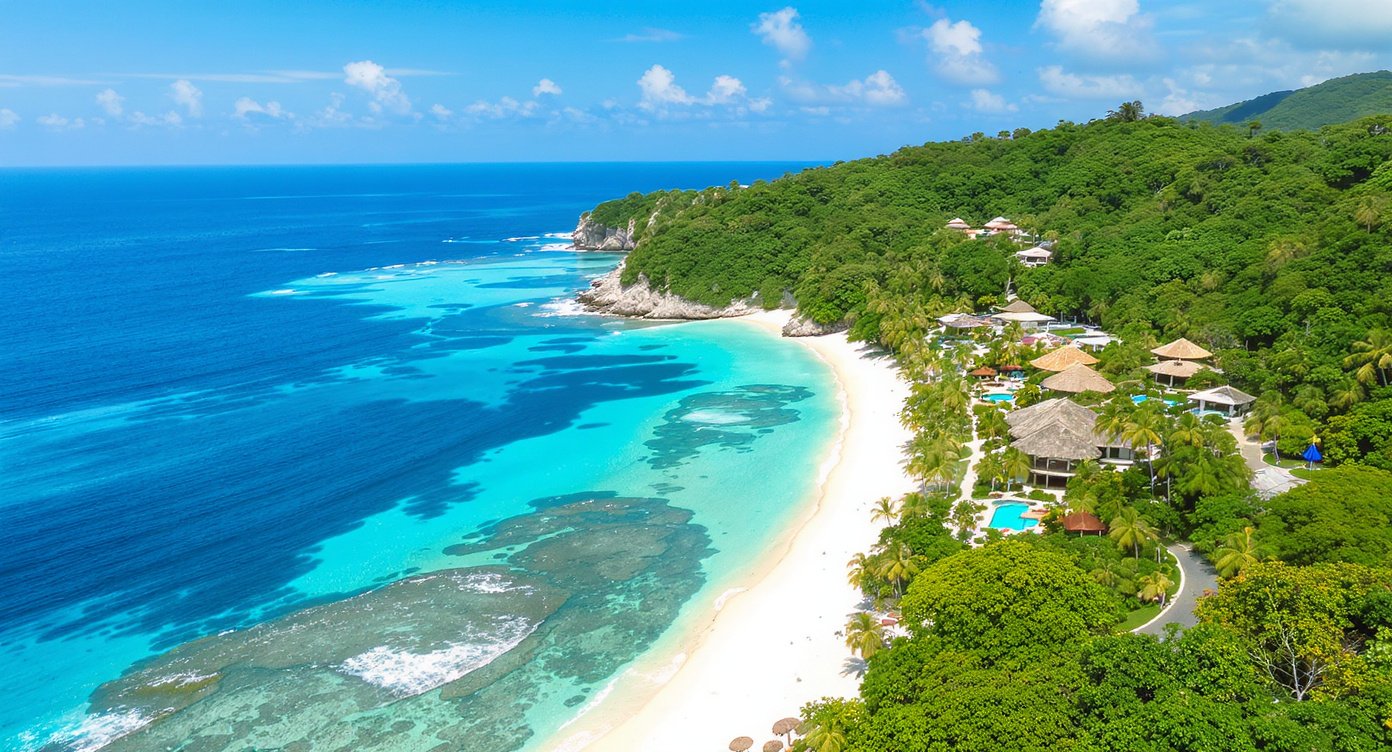
Kuta Lombok and the Mandalika Zone
The highest-yield zone in Lombok for short-stay property. The Mandalika Special Economic Zone and the surrounding Kuta coastal strip benefit from year-round tourist infrastructure, direct international marketing by the Indonesia Tourism Development Corporation (ITDC), and the MotoGP event cycle.
Our latest Mandalika market update covers the structural drivers in detail. The headline: 2024 data supports gross yields of 14–18% on well-positioned, managed properties.
Realistic scenario for a Kuta villa (2-bed, pool, USD 200,000 entry):
- Nightly rate: USD 110 average across the year
- Occupancy: 62% (226 nights)
- Gross income: USD 24,860/year = 12.4% gross yield
- Management (20%): −USD 4,972
- Maintenance/insurance/staff: −USD 5,000/year
- Net income: ~USD 15,000–17,000/year = 7.5–8.5% net yield
This is the realistic, professionally-managed scenario for a Kuta Lombok villa in 2026. Not the 18% gross that gets quoted. Not the 3–4% that cynics project. Approximately 7.5–8.5% net — roughly double what a comparable Bali villa generates net.
Selong Belanak and South Lombok
Growing rapidly on the back of surf tourism and an emerging boutique hospitality scene. Entry prices are lower than Kuta, which mathematically improves gross yield percentages. A villa that would cost USD 300,000 in Kuta can be acquired for USD 180,000–220,000 in Selong Belanak.
Short-stay occupancy is lower than Kuta (45–60% for new properties) because the destination is less developed. But the surf rental niche — surf school packages, multi-week stays, instructor accommodation — achieves higher occupancy through longer average stays. Gross Lombok rental yield of 10–15% is achievable. Net yields of 5–8% for managed properties.
Gili Islands
The Gili Islands have a more established short-stay market with higher competition. Gili Trawangan is the most developed and most liquid; Gili Air and Gili Meno offer more lifestyle-oriented, lower-volume investments. Yields are slightly compressed relative to Kuta Lombok because of higher supply density. Gross 10–14%, net 4.5–7% for managed properties. The market is stable rather than high-growth, which suits investors prioritising income over appreciation.
Running the Real Numbers: Investor Comparison
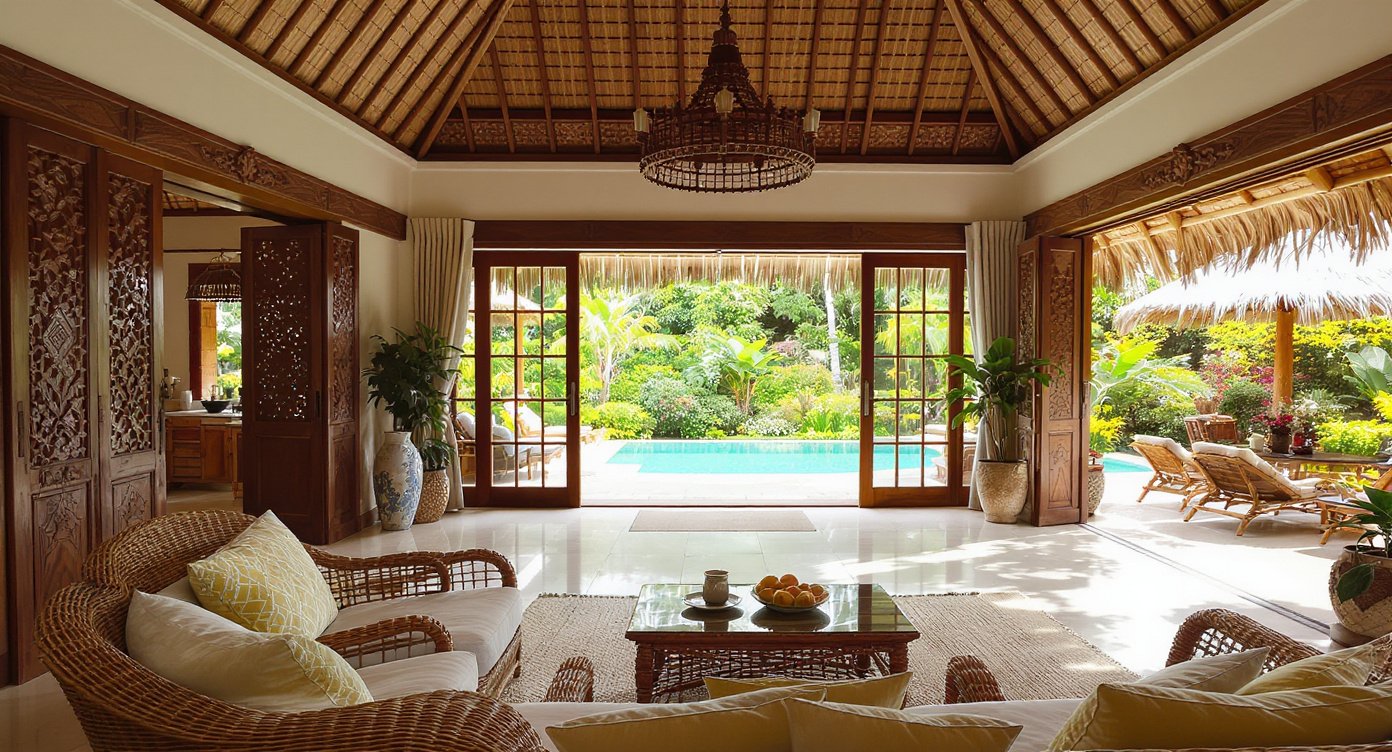
To make this concrete, consider two investors in 2026, both deploying USD 250,000.
Investor A buys a 2-bedroom villa with pool in Kuta Lombok for USD 235,000. Under full-service professional management:
- Average nightly rate: USD 105
- Occupancy: 61% (223 nights)
- Gross rental income: USD 23,415 (9.97% gross Lombok rental yield)
- Less management 20%: −USD 4,683
- Less maintenance/insurance: −USD 4,000
- Net income: ~USD 14,730/year (6.3% net yield)
- Appreciation at 14% CAGR: value reaches USD 452,000 by 2031
- 5-year total return: 123.7%
Investor B parks USD 250,000 in a UK buy-to-let at 4.5% gross / 3.2% net:
- Net rental income: USD 8,000/year
- Capital appreciation at 3% CAGR: USD 290,000 by 2031
- 5-year total return: 32%
The Lombok rental yield investor earns 4× the total return over 5 years — driven by the appreciation differential but supported by a meaningful net yield advantage.
Use the Lombok Investment ROI Calculator to run your own scenario with your specific entry price, rate, and occupancy assumptions. Takes under 2 minutes.
The Honest Risk Factors
No yield discussion is complete without the downside scenarios. Here are the risks that can compress actual Lombok rental yield below the benchmarks above:
Occupancy shortfall in Year 1–2. New properties take time to accumulate reviews and establish OTA rankings. A well-positioned Kuta villa might achieve 45–50% occupancy in Year 1 rather than 62%. Budget for this in your cash flow projections.
Management fee drift. Some operators quote low fees and increase them once they hold your bookings. Lock in fee structures contractually, including what is and is not included.
Maintenance costs in tropical climates. Humidity, saltwater proximity, and high occupancy create faster wear cycles than temperate markets. Budget IDR 50–80 million/year (~USD 3,000–5,000) for a 2-bedroom villa in the first 3 years, more thereafter.
Regulatory changes. Indonesia’s short-stay rental market has seen periodic regulatory review. The 7 mistakes foreign investors make in Indonesia includes structuring errors that create tax and compliance risk.
Long-Term vs Short-Term Rental: Which Yields More?
| Short-Stay | Long-Term | |
|---|---|---|
| Gross yield | 10–18% | 5–8% |
| Net yield (managed) | 5–10% | 4–7% |
| Occupancy risk | Moderate-High (seasonal) | Low (contracted) |
| Management intensity | High | Low |
| MotoGP/peak premium | Yes | No (contracted rate) |
| Best for | Investors prioritising maximum return | Investors prioritising stability |
Long-term rental in Lombok is primarily sourced from expats, digital nomads, and tourism operators. Monthly rates for quality 2-bedroom villas range IDR 10–20 million/month (~USD 615–1,230/month). Gross yield on a USD 200,000 villa at IDR 15 million/month = approximately 9% gross / 7% net — less than peak short-stay but without the seasonal volatility.
What to Do Before Buying for Lombok Rental Yield
- Get actual comparable rental data, not developer projections. Ask local property managers what similar properties in the same area achieved in the last 12 months. Demand actual booking records, not projections.
- Model three scenarios. Use the Lombok ROI Calculator with a conservative occupancy (45%), a base case (60%), and an optimistic case (75%). Invest only if the conservative case still meets your return requirements.
- Understand your cost base before buying. Full-service management (20%), maintenance (2–3%), insurance (~0.5%), local taxes (~1%) add up to approximately 25–28% of gross revenue. A USD 200,000 villa at 12% gross yield generates approximately USD 24,000/year gross — and USD 13,600–17,280 net at these cost rates.
- Structure correctly. Short-stay rental income from Indonesian property, operated commercially, requires a PT PMA structure for foreign investors. The Ultimate Guide to Lombok Real Estate covers structuring options in full.
- Visit the specific property. Location within a zone matters enormously. Two villas 2km apart in Kuta Lombok can have materially different occupancy because of access road quality, beach proximity, or view.
Conclusion: The Lombok Rental Yield Reality
The actual Lombok rental yield in 2026 is not the 18–20% gross that brochures quote. Nor is it the 3–4% net that sceptics assume. The realistic picture for a professionally managed short-stay villa in the Kuta/Mandalika zone — in terms of Lombok rental yield — is 6–9% net, built on 12–16% gross, with seasonal concentration around peak season and MotoGP.
For Selong Belanak and secondary south Lombok locations: 5–8% net, slightly lower occupancy, lower entry price. Both outcomes represent materially stronger net yields than comparable Bali investments, which have compressed to 3–4% net in established zones.
The combination of above-average Lombok rental yield and 12–18% annual appreciation makes Lombok property one of the stronger risk-adjusted investment cases in Southeast Asia right now — for investors with a 5–7 year horizon who understand that the yield picture strengthens as tourism infrastructure matures.
Download the free Lombok Investment Guide for a complete checklist covering yield benchmarks, management due diligence, and structure requirements for foreign buyers.
This article is for informational purposes only and does not constitute financial or investment advice. Yield figures represent current market benchmarks based on available operator data and are not guarantees of future performance. Always conduct independent due diligence and consult a qualified financial adviser and Indonesian notaris before making investment decisions.

Author: Brusca
Living in Indonesia for 15 years, with hands-on experience in how the Indonesian real estate industry actually works. Lombok is currently the fastest-growing property market in Southeast Asia. Every listing on this site is vetted where timing allows.







Leave a Reply