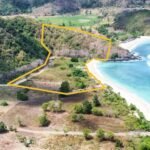
Mawi BeachAI-Powered Investment Intelligence
AI-Generated · Updated 23 Aug 2026Investment Overview
Mawi Beach sits on the underdeveloped stretch of South Lombok’s coastline roughly 30–45 minutes west of Kuta town, with very limited on-site infrastructure and only basic warungs at the beach[33]. This positions Mawi as a frontier submarket leveraged to the stronger tourism engines of Kuta/Mandalika and the emerging luxury clusters around Tampah, Mawun, and Selong Belanak, where land prices and tourism infrastructure are already substantially higher[16][24][47]. West Nusa Tenggara targeted 2 million tourist visits in 2023 and had already recorded 1.7 million by July 2023, showing strong post-pandemic recovery and structural tourism growth into the region[66]. In the first half of 2024, tourist arrivals in West Nusa Tenggara reached about 1.5 million, maintaining momentum and underpinning demand for coastal hospitality zones like Mandalika and South Lombok[70].
From an investment grading perspective, Mawi today is an opportunistic growth market: land pricing is materially discounted versus Kuta and Tanjung Aan but is now receiving spillover attention from large-scale developments and mid- to high-end villa projects in the surrounding bays[16][24][47][60]. In Hub Lombok’s 2026 market data, Mawun land (directly adjacent and highly comparable to Mawi in character) trades around Rp 50–80 million per are (≈Rp 500,000–800,000/m²), versus Rp 300–400 million per are (≈Rp 3,000,000–4,000,000/m²) in Kuta and Rp 150–250 million per are in Selong Belanak[16]. This 50–80% pricing discount relative to Kuta and 30–60% relative to prime Selong Belanak gives investors meaningful upside if tourism, infrastructure, and villa product gradually converge with those more established areas over the next cycle[16][24]. Overall, the area’s value proposition is high-growth potential driven by regional tourism expansion and large-scale infrastructure (Mandalika Urban Tourism and Infrastructure Project, Lombok Airport expansion, Tanjung Aan luxury hotel investment) with low current competition at Mawi itself[35][42][57].
Given the combination of strong regional tourism metrics, major government-backed infrastructure, and still-early land pricing, the Mawi Beach area can be rated as Bullish but high-risk, suitable for investors comfortable with frontier-market execution, legal, and liquidity risks. The core thesis is medium-term capital appreciation on land and development margins on surf-focused villas and boutique hospitality targeting higher-spending segments drawn to South Lombok’s growing luxury ecosystem[16][35][47][60].
Tourism Trends
At the provincial level, West Nusa Tenggara (NTB) has seen a robust rebound in tourism. The NTB government targeted 2 million tourists (domestic and international) in 2023, and by July 2023, visitor numbers had already reached around 1.7 million, indicating strong growth and a high probability of surpassing the annual target[66]. In the first half of 2024, tourist arrivals in NTB were reported at about 1.5 million, confirming that the recovery has transitioned into sustained expansion rather than a one-off rebound[70]. Regionally, Lombok Barat alone recorded 320,658 tourist visits in 2023 against a target of 185,000, a 73% outperformance that illustrates how Lombok’s coastal destinations are attracting well above expected volumes[62][71].
Gateway data further supports the trend: in April 2023, international arrivals through Lombok’s Zainuddin Abdul Madjid International Airport (BIZAM) reached 7,812, up 43.58% from 5,441 in March 2023[61]. European tourists accounted for about 3,100 arrivals in that month, followed by ASEAN visitors (2,811), non-ASEAN Asian tourists (1,169), and smaller but notable flows from Oceania (352) and the Americas (331), highlighting a diversified inbound mix beyond a single source market[61]. Domestic tourist arrivals in NTB reached about 1,427,974 in April 2023, a 35.74% increase on the prior month, showing strong domestic demand which is particularly important for shoulder-season resilience[61].
Short-term rental data from Airbnb users in Lombok between October 2023 and September 2024 shows 115 active listings, an average length of stay of 3.9 days, a typical group size of 2.1 people, and an average booking rate of 26% of available nights[75]. Guests paid around IDR 470,917 per night (excluding fees) and spent about IDR 988,926 per stay, indicating mid-market spending for Airbnb-style accommodations[75]. Seasonality is pronounced, with August identified as peak month for Airbnb stays, consistent with the broader dry-season tourism peak in Lombok[75]. Parallel villa-market benchmarks near Selong Belanak suggest higher-spending segments: private pool villas commonly command USD 250–1,500 per night depending on bedroom count and season, with prices varying by up to 50% between low season (January–March) and peak season (July–August)[13]. This points to a bifurcated demand structure in South Lombok—volume-driven mid-market rentals and high-yield luxury villas—which investors at Mawi Beach can tap by tailoring product to target either surf-oriented mid-market or upper-tier experiential travelers[13][10][8].
Infrastructure Pipeline
Mawi Beach itself has minimal built infrastructure: the surf guide Surf Atlas notes that the area currently consists of a basic car park and a single warung, with no on-site accommodation or permanent commercial structures[33]. Access is via a rural road system west of Kuta, with travel times of roughly 30–45 minutes depending on how vehicles handle potholes and variable road quality[33]. This underlines both current inconvenience (and thus lower mass tourism) and the upside potential from incremental road upgrades between Kuta, Mawun, and Mawi as South Lombok’s tourism footprint grows[33][35].
Regionally, infrastructure is being transformed by the Mandalika Special Economic Zone (SEZ), one of Indonesia’s flagship “10 New Balis” tourism projects on the South Lombok coast[35][40]. The Asian Infrastructure Investment Bank approved US$248.4 million in financing for the Mandalika Urban and Tourism Infrastructure Project (MUTIP), with total project cost around US$316.5 million when including government and ITDC contributions[42][38]. Phase I (2019–2023) focused on core infrastructure—internal roads, electricity distribution, drainage, landscaping, and public facilities—while Phase II (2024–2026) adds hotel and resort capacity, entertainment facilities, and enhancements to the MotoGP circuit and surrounding areas[35][40]. The project location has good access from Lombok International Airport, improving connectivity for the entire south coast including Kuta, Tanjung Aan, and indirectly the Mawi corridor[41].
Beyond Mandalika itself, the government has undertaken projects such as the Kuta–Keruak road widening, slum housing restructuring, drainage repair, and road landscape improvements in the wider region, which strengthen backbone connectivity and liveability for nearby communities[36]. A new pier project in Mandalika is scheduled to become operational around 2026, further improving maritime access and potentially supporting excursion traffic along the south coast, including to less-developed beaches like Mawi[44]. Private developments also contribute to infrastructure: Tampah Hills near Tampah/Mawun has invested in public facilities and infrastructure in Mekar Sari village, with local authorities noting that the project brings benefits to both residents and the regional government[54]. Combined, these public and private investments within roughly a 5–15 km radius of Mawi are systematically upgrading roads, utilities, and destination attractiveness, making future road and service extensions to Mawi highly likely over the medium term[35][42][54].
Investor Sentiment
Investor and developer sentiment around South Lombok is currently positive, anchored by large-scale projects and active villa communities rather than speculative land banking alone. Tampah Hills, a premium villa resort complex near Tampah and Mawun, has progressed from concept into execution, with reports indicating four villas completed, around ten under construction, and a pipeline of 12–15 further villas scheduled to start after 2022[47]. Separate coverage notes plans for roughly 120–150 premium villas along with sports facilities, restaurants, co-working space, and extensive common areas, signalling long-term confidence in the region’s ability to support a high-end community[51]. A local news report states that out of 150 villas being built at Tampah Hills, 100 had already been sold to investors and 16 were operationally rented, underscoring real transaction depth and rental market validation rather than merely on-paper interest[56].
Mawi Valley, located in the hills above Mawi Beach, has commenced Phase 1 villa construction and is offering hillside plots and sustainable villas on a freehold basis, indicating that dedicated Mawi-focused development has moved from planning into build stage[60]. Tampah Reserve, another South Lombok project, is marketing sea-view hill land with modern vernacular villas at prices of IDR 100,000,000–150,000,000 per 100 m² as of February 2026, with multiple plots still available, showing continuous land investor appetite at mid- to upper-tier price points[58]. In Mandalika, international-branded hotels such as Pullman Lombok Mandalika Beach Resort and Novotel Lombok Resort & Villas are operational, and additional hotel plots remain in planning and construction, with a deliberate pace specifically to avoid oversupply and protect operator performance[57].
These data points—sold villa inventory at Tampah Hills, ongoing construction at Mawi Valley, continued plot sales at Tampah Reserve, and measured but steady Mandalika hotel pipeline—suggest a market where serious capital is already committed and investors expect long-term tourism growth in South Lombok[47][51][56][58][57][60]. The balance of demand versus supply remains favourable at Mawi itself due to the absence of direct beachfront accommodation and limited stock; demand for surf and nature experiences is currently served from Kuta, Tampah, Mawun, and Selong Belanak bases, which creates room for well-positioned new inventory at Mawi without immediate saturation risk[33][47][60].
Rental Demand
Short-term rental demand in Lombok, including South Lombok, is evidenced by Airbnb and villa-market data. For the broader Lombok Airbnb market (observation period October 2023–September 2024), there were 115 active listings, with an average length of stay of 3.9 days and a typical group size of 2.1 people[75]. A typical listing was booked for 26% of available nights, with guests paying about IDR 470,917 per night and spending approximately IDR 988,926 per stay, indicating mid-range, budget-conscious travellers coexisting with higher-yield villa guests[75]. Seasonality is strong, with August highlighted as peak month, which aligns with the dry season and major holiday periods in regional source markets[75].
In the South Lombok villa segment, independent data from Samudra Villas shows that occupancy strongly depends on management quality: independently managed properties often run at 40–50% occupancy, professional operators with an active OTA (online travel agency) strategy achieve 60–72%, and the best operators reach 72–80% occupancy[5]. A new, well-presented luxury villa can reach 60%+ occupancy within roughly six months if partnered with an effective manager, demonstrating that performance is more constrained by execution than by underlying demand[5]. Benchmark nightly rates for private pool villas near Selong Belanak—roughly 20–30 minutes from Mawi—range from about USD 250 to USD 1,500 per night depending on bedroom count and season, with mid-range 2–3 bedroom villas at USD 300–700 and larger estates at USD 800–1,500+; seasonal variations can be up to 50% between low season (January–March) and peak season (July–August)[13]. Luxury Lombok references indicate typical high-end villas across South Lombok (Selong Belanak, Kuta Mandalika, and similar locations) commonly command USD 250–900 per night for 3–5 bedroom designer villas with staff, pools, and ocean or panoramic views[10]. Specific properties such as Wave Lombok’s beachfront villas near Selong Belanak start at USD 285–350 per night in low season and can reach approximately USD 755–970 during Christmas, New Year, and major event weeks, reinforcing the ability to achieve premium ADR in peak periods[8].
Long-term rental demand in South Lombok tends to be driven by surf professionals, remote workers, and expatriate residents who often prefer bases like Kuta, Tampah, or Selong Belanak, though data is more fragmented. However, the fact that 16 villas at Tampah Hills were already operationally rented and that 100 out of 150 villas have been sold to investors indicates a base of medium-term and repeat users who underpin longer-stay, quasi-residential occupancy[56][51]. Mawi itself currently relies on these surrounding hubs for accommodation, with surfers and visitors commuting in for sessions from Kuta and nearby bays, suggesting that any future lodge or villa development at Mawi could capture spillover demand and convert day-trip visitors into on-site guests, especially in peak surf and dry seasons[33][5].
Price Benchmarks
Risk Factors
Entry Strategy
Developer Activity
Market Outlook
Powered by Lombok AI Intelligence Engine · Updated weekly